Inside Seoul

Korean Food Chains & Franchises

What to eat, how to order, and where to find Korea's most popular food chains

AllBBQ & MeatChickenNoodles & SnacksCoffee & CafeBakery & DessertBreakfast & Fast Food
S

Saemaeul Sikdang

Saemaeul Sikdang (새마을식당) is one of Korea's most beloved BBQ chains, founded in 2002 by celebrity chef Baek Jong-won — the star of Netflix's Culinary Class Wars and Korea's most famous restaurateur. Named after the iconic 1970s New Village Movement, the restaurant immerses diners in a nostalgic retro atmosphere with communal wooden tables and real charcoal briquette grills. The star of the menu is the Yeoltan Bulgogi (열탄불고기, charcoal-grilled marinated pork at just ₩10,900) — thin slices seared over real charcoal for a distinctive smoky sweetness. Equally legendary is the 7-Minute Pork Kimchi Stew (7분돼지김치찌개, ₩8,000), a bubbling pot of aged kimchi and tender pork that reaches peak flavor after exactly seven minutes. Staff handle all the grilling, making it perfect for BBQ first-timers. Side dishes including kimchi, lettuce wraps, garlic, and sauces are unlimited and free to refill. With locations in Hongdae, Myeongdong, and Dongdaemun, English-friendly staff, and prices starting under $10 USD per person, Saemaeul Sikdang is arguably the best-value authentic Korean BBQ experience in Seoul. Part of Theborn Korea (KOSPI-listed since 2024), the chain has over 70 domestic stores and international presence in Japan, Thailand, Hong Kong, the US, and more.
H

Hanam Pig House

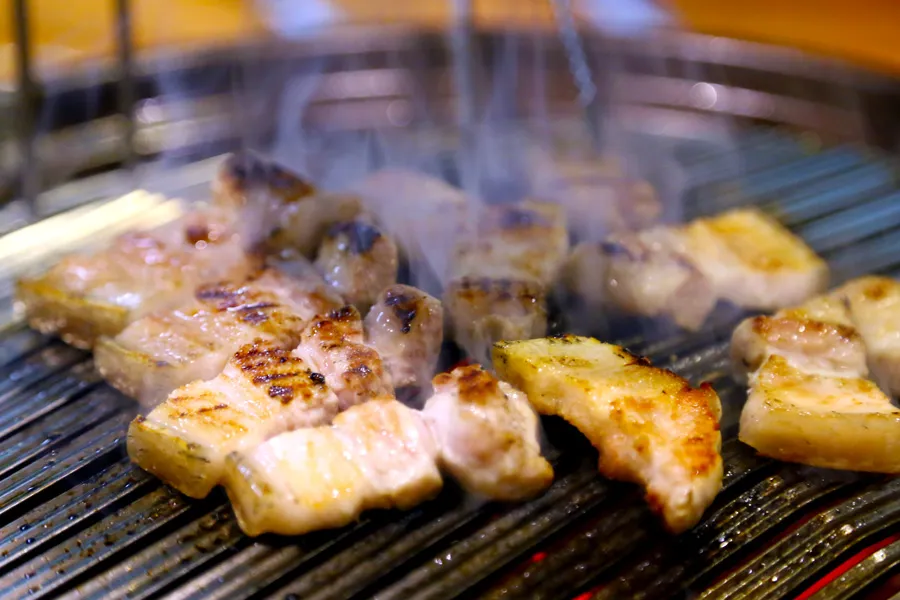
Hanam Pig House (하남돼지집) is one of Korea's most celebrated pork BBQ franchise chains, founded in June 2010 in a tiny 40-square-meter shop in Hanam City by entrepreneur Jang Bo-hwan. Earning the tagline 'Korea's Standard for Samgyeopsal,' it has grown to over 200 locations nationwide with international expansion to Malaysia, Thailand, and Mongolia. What truly sets it apart is the signature 열탄불 (hot charcoal fire) grilling method — staff pre-sear the meat at approximately 450°C before finishing it at your table on a distinctive slanted grill that drains excess fat for a crispier, cleaner result. Unlike most Korean BBQ restaurants, trained staff handle everything from grilling to cutting, making it ideal for first-timers. The restaurant's signature 명이나물 (pickled wild garlic leaf) wraps add a unique flavor found nowhere else. Most locations operate from evening until late night. Popular tourist-area branches include Myeongdong, Hongdae, and Dongdaemun. A typical meal for two costs around 55,000–75,000 KRW ($40–55 USD). The brand uses exclusively certified Korean pork (한돈) and has been consistently ranked among Korea's top franchise brands for over a decade.
M

Maple Tree House

Maple Tree House (단풍나무집) is a premium Korean BBQ restaurant established in 2005 in Samcheong-dong, Seoul. Renowned for its contemporary, Western-friendly atmosphere that blends natural elements with modern design — the Samcheong-dong branch features a stunning birch tree interior described as stepping into a serene forest. Featured in CNN Travel's '13 things you've got to do in Seoul' and ranked #47 of 25,000+ restaurants in Seoul on TripAdvisor, it has become the go-to Korean BBQ destination for first-time visitors. The signature Maple Galbi (단풍갈비, ₩64,500) features sweet soy-marinated short ribs, while their 1++ Aged Hanwoo Sirloin (₩62,500) offers the finest grade of Korean native beef. Staff grill everything to perfection at your table, with full English menus and bilingual service at all branches. With 3 Seoul locations (Samcheong-dong, Itaewon, Gangnam) plus international branches in Manila, Bangkok, and Taipei, Maple Tree House delivers a refined BBQ experience. Lunch sets from ₩13,500 offer exceptional value. Reservations recommended 2-4 weeks ahead for dinner.
G

Ggupdang

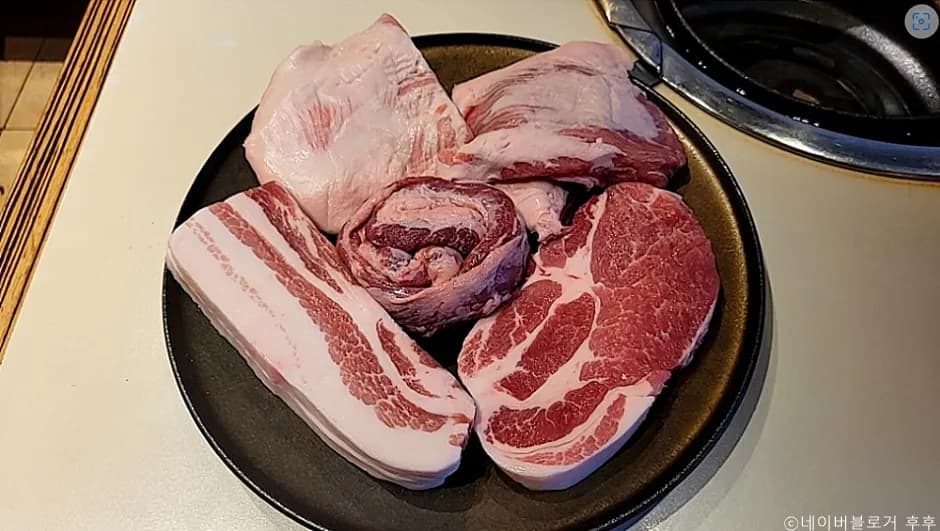
Ggupdang (꿉당) is a Michelin Bib Gourmand-recognized premium pork BBQ restaurant in Seoul, holding the distinction for four consecutive years since 2022. Founded in 2019 in Sinsa-dong, it pioneered the '돼마카세' (pork omakase) trend — elevating Korean pork BBQ to a fine-dining-adjacent experience. With just 3 locations (Sinsa, Seongsu, Songpa), each cut is treated like a course: the star is KOKUMI Moksal (aged pork neck, 15-day dry-aged for extraordinary tenderness, ₩19,000) alongside thick-cut skin-on belly and the limited 'Kkup-sal' (deboned back rib meat). The proprietary grilling method uses binchotan (Japanese white charcoal) with custom aluminum grill plates for semi-direct heat — delivering a fast, even sear without flare-ups. Staff handle all grilling, presenting each cut omakase-style. Unique touches include truffle jjapagetti (₩9,000) and optional Amour Caviar pairings. Located in Seoul's trendiest neighborhoods (Garosu-gil and Seongsu 'Brooklyn of Seoul'), reservations via CatchTable are recommended. Expect ₩30,000–50,000 per person. No corkage fee at Seongsu. Arrive at opening time to avoid 1-2 hour peak waits.
W

Wonhalmeoni Bossam

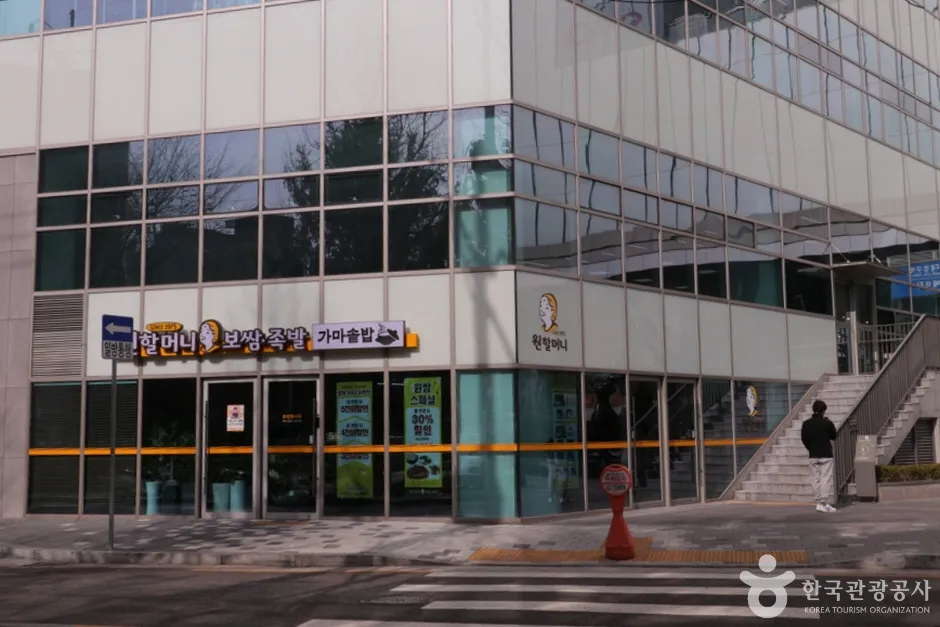
Wonhalmeoni Bossam (원할머니보쌈) is one of Korea's oldest and most recognized bossam (boiled pork wrap) franchise chains, with roots dating back to 1975. The story began in a tiny nameless restaurant near Cheonggyecheon, where founder Kim Bo-bae — an elderly grandmother — served tender boiled pork that earned the nickname 'Grandmother's Bossam.' When copycats appeared, the original added 'Won' (원, meaning original) to differentiate. Now with approximately 295 locations nationwide under parent company Won & One Co., Ltd., it's a cornerstone of Korean late-night food culture. The signature experience involves wrapping warm, tender slices of boiled pork (수육) in pickled napa cabbage with bossam kimchi, fermented shrimp paste (새우젓), ssamjang, raw garlic, and optional chili — then eating the whole bundle in one satisfying bite. The Uiseong Garlic Bossam features premium garlic from Gyeongsang Province with unique ssamtteok (pumpkin and mugwort rice cakes). Jokbal (braised pig's feet) is equally popular. Solo sets from ₩19,000, couple sets around ₩43,000-52,000. Open until midnight daily. Branches in Hongdae, Myeongdong, and Gangnam. Listed on VisitKorea as a recommended restaurant. Delivery available via Korean apps.

P

Puradak Chicken

Puradak Chicken (푸라닭) is Korea's premium fried chicken chain, founded in 2002 and repositioned around 2017 as an upscale brand with sleek matte black packaging that has become iconic on Korean social media and K-drama product placements. With approximately 1,100-1,200 stores nationwide, Puradak represents the elevated side of Korean chicken culture. The must-try flagship item is the Black Label Garlic Soy Chicken (블랙라벨 간장치킨, ~₩21,000) — crispy fried chicken glazed in a rich, sweet garlic soy sauce that is distinctly different from Western fried chicken. Other popular choices include the Gochu Basasak (spicy chili-crunch chicken) and Pure Cream Chicken (creamy white garlic sauce). Primarily delivery-focused with many dine-in locations available, ordering is straightforward via Baemin or Coupang Eats apps with picture menus accessible to non-Korean speakers. Many tourists discover Puradak through K-dramas where the recognizable black boxes appear prominently. A whole chicken (serves 2-3) costs around ₩20,000-22,000.

G

Goobne Chicken

Goobne Chicken (굽네치킨) is the only major Korean chicken chain built entirely around oven-roasting rather than deep-frying, founded in 2005. The name comes from '굽다' (to roast/bake). With approximately 900-1,000 stores nationwide and international locations in Southeast Asia and the US, Goobne dared to challenge Korea's deep-fried chicken obsession — and won a devoted following. The bestseller Volcano Chicken (굽네 볼케이노, ~₩22,000) is oven-roasted chicken coated in a fiery sweet-spicy volcanic sauce with cheese powder — visually spectacular and Instagram-worthy. The Original Oven Chicken (~₩19,000) showcases herb-seasoned, crispy-skinned chicken without any frying. For health-conscious travelers or those who find deep-fried chicken too heavy after days of Korean BBQ, Goobne offers a lighter yet boldly flavored alternative. The chicken tastes remarkably crispy despite being oven-roasted, which challenges expectations. Galbi Cheonwang (Korean BBQ galbi-glazed oven chicken, ~₩22,000) is another tourist favorite.

N

Nene Chicken

Nene Chicken (네네치킨) is one of Korea's oldest and most beloved fried chicken franchises, founded in 1999 — predating the global Korean fried chicken boom. The name means 'yes yes' in Korean, reflecting its approachable personality. With approximately 1,200-1,300 stores nationwide, Nene is a household name that helped define modern Korean chicken culture. Its greatest innovation is the Half & Half (반반) concept: ordering two different flavors in one box, now standard across Korean chicken chains but pioneered by Nene. The must-try Snowing Chicken (스노윙치킨, ~₩21,000) features fried chicken dusted with a generous snowfall of sweet onion-cheese powder — visually striking and unlike anything in Western fried chicken. With often 15+ flavors available, Nene is the ideal first Korean fried chicken experience for tourists who want variety without commitment. Less spicy options are readily available for those with lower spice tolerance. Whole chicken serves 2-3 people at ₩19,000-23,000.

B

BBQ Chicken

BBQ Chicken (BBQ치킨) is Korea's #1 chicken franchise by store count, founded in 1995 by Yoon Hong-geun under parent company Genesis Co., Ltd. The name stands for 'Best of the Best Quality.' With over 4,000 outlets across 57 countries, BBQ is arguably the most globally recognized Korean fried chicken brand. The signature Golden Olive Chicken (황금올리브치킨, ~₩28,000) is fried in a proprietary blend of Spanish extra virgin olive oil and sunflower oil with 20+ herbs and spices, creating an exceptionally crispy yet non-greasy coating. BBQ gained massive international attention through its BTS endorsement (2016-2018) during the group's meteoric rise, making it a pilgrimage destination for ARMY fans. The chain also appeared in hit K-dramas like Goblin. Other must-try items include the Jamaican Jerk Chicken and Crunchy Butter Chicken. BBQ operates the famous 'Chicken University' in Icheon — a dedicated R&D facility with 40+ researchers. Key Seoul locations include Myeongdong Star (listed on VisitKorea, open until midnight), Hongdae, and Gangnam. Order via Shuttle Delivery (foreigner-friendly, accepts USD/credit cards) for hotel delivery. A whole chicken serves 2-3 at ₩23,000-33,000.

K

Kyochon Chicken

Kyochon Chicken (교촌치킨), officially Kyochon 1991, is South Korea's most iconic fried chicken brand and a must-visit for any tourist in Seoul. Founded in 1991 by Kwon Won-kang in the small city of Gumi, Kyochon revolutionized Korean fried chicken with its signature double-frying technique — each piece is fried twice to achieve an impossibly thin, shatteringly crispy coating while keeping the meat juicy inside. What truly sets Kyochon apart is the hand-brushed sauce application: every piece is individually coated for a glossy, flavor-packed finish. The three flagship series define the experience: Original Soy Garlic (간장, ₩19,000) — a savory-sweet glaze perfected over three decades; the Honey Series (허니, ₩19,000) with acacia honey layered over soy garlic — the most popular choice among international visitors; and the Red Series (레드, ₩20,000) with Korean cheongyang chili peppers. With 1,360+ locations across Korea and 67 stores in 15 countries, Kyochon ranks #1 in the Korea Brand Power Index for 5+ consecutive years. First Korean chicken brand with Halal certification and listed on KOSPI. Solo Wing portions (₩7,900) are perfect for solo travelers. Half & Half lets you try two flavors. Late-night chimaek at Hongdae is essential Seoul culture.

M

Mom's Touch

Mom's Touch (맘스터치) is Korea's #1 burger franchise by store count with approximately 1,490 locations — surpassing even McDonald's in Korea. Founded in 1997, it created a uniquely Korean fast food concept combining American-style burgers with Korean fried chicken expertise. The legendary Thigh Burger (싸이버거, ₩5,200) uses a whole boneless chicken thigh — marinated and fried fresh to order — instead of a minced or frozen patty. This results in an extraordinarily crispy, juicy chicken burger with no equivalent abroad; over 390 million have been sold. Korean university students call it the 'Correct Burger' (정답 버거). A full set with Cajun seasoned fries and cola costs just ₩7,600 (~$5.50 USD), making it one of the best value meals in Seoul. Everything is cooked after ordering, arriving hot and crispy. The Myeongdong flagship (3 floors, opened June 2024) was designed specifically for international tourists experiencing 'K-Burgers.' Other tourist-friendly locations include DDP (Dongdaemun Design Plaza), Gangnam Station, and near Hongdae. Also serves whole fried chicken and boneless chicken with Korean flavors like soy garlic and yangnyeom. Expanding internationally to Japan, Thailand, and Mongolia.

B

BHC Chicken

BHC Chicken (BHC치킨) is Korea's No. 1 chicken franchise by store count and revenue, with over 2,200 locations nationwide. Originally 'Byul Hana Chicken' (One Star Chicken), now standing for 'Better & Happier Choice,' BHC became a cultural phenomenon in 2014 with the launch of Bburinkle (뿌링클) — crispy fried chicken generously dusted with a proprietary sweet cheese seasoning powder made from blue cheese, cheddar, onion, and garlic, served with a creamy Emmental cheese and yogurt dip. Over 100 million Bburinkle have been sold worldwide, making it the single most viral Korean fried chicken item. The name combines 'bburi' (뿌리다, to sprinkle) with the act of shaking the cheese powder onto the chicken. Other standout items include Matcho-King (soy sauce + fresh pepper, ₩22,000), Gold King (honey soy garlic, ₩21,000), and the 2025-launched Kwasak-King (ultra-crispy fried). Half & Half sets (~₩19,000-20,000) let you try two flavors. Jun Ji-hyun (from K-drama 'My Love from the Star') served as brand ambassador. The Myeongdong branch offers English/Chinese/Japanese menus. A whole chicken serves 2-3 at ₩21,000-23,000. The Bburinkle Cheese Balls side dish (₩7,000) is Instagram-famous. Winner of Korea Brand Value Award for 8 consecutive years.

Y

Yupdduk (Yeopgi Tteokbokki)

Yupdduk (엽기떡볶이, meaning 'Crazy Tteokbokki') is Korea's most iconic spicy tteokbokki franchise, founded in 2012. With 500+ locations domestically and 20+ international stores (including New York and LA), it built its reputation on extreme spice levels and generous shareable portions served in large trays. The signature spice level system ranges from 'Less Spicy' to the infamous 'Crazy Spicy' (엽기맛) — many tourists film themselves attempting higher levels for social media. Portions are designed for 2-3 people starting at ~₩14,000. Customization is key: add cheese (₩2,000-3,000), ramyeon noodles, fried tempura sets, and rice balls to build your ideal combo. The melted cheese addition is highly recommended as it beautifully balances the heat. Most locations have picture menus and tablet ordering, reducing language barriers. Popular tourist-area branches in Hongdae, Gangnam, and Myeongdong. Delivery via Baemin is also popular for eating at your hotel. Start at 'Original' level if you're not accustomed to Korean spice — you can always go hotter next time.
D

Dookki

Dookki (두끼, meaning 'two meals' — eat enough for two) is Korea's pioneering all-you-can-eat tteokbokki buffet chain, launched in 2014. With 300+ locations in Korea and 100+ international stores across Southeast Asia (Vietnam, Philippines, Indonesia), Dookki disrupted the tteokbokki market with its unlimited DIY concept. Here's how it works: pay a flat fee (₩9,900-12,900 per person), then choose your own rice cakes, noodles (ramyeon, udon, glass noodles), sauces (mild to extreme spicy, cream, jjajang black bean), and toppings (fish cakes, dumplings, sausages, vegetables, cheese, eggs, seafood) from a buffet bar. Cook everything at your table on a built-in induction cooker in a shared pot. Unlimited refills within 70-90 minutes. The grand finale: staff help you make bokkeumbap (fried rice) with the remaining sauce — don't skip this. At roughly $7-9 USD per person, this is one of Seoul's best value meals. The visual buffet format requires zero Korean — just see and pick. Perfect for groups and families. Visit during weekday lunch for lower prices.
K

Kimbap Cheonguk

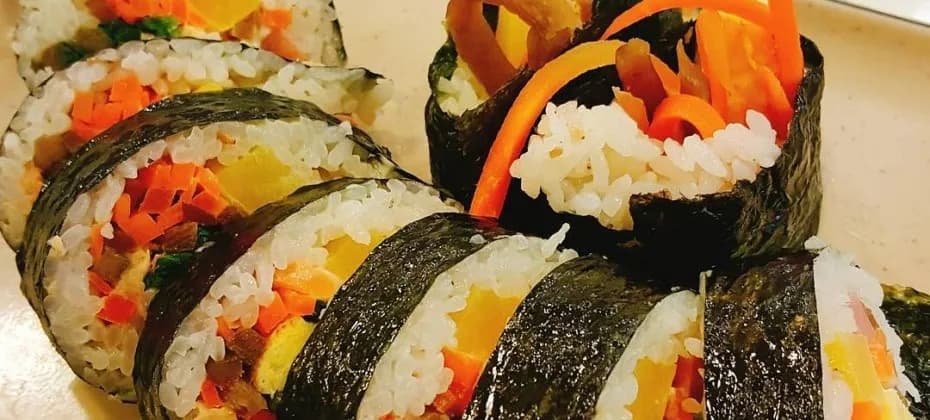
Kimbap Cheonguk (김밥천국, literally 'Kimbap Heaven') is Korea's most ubiquitous budget restaurant chain with an estimated 1,000+ locations nationwide. Born during the 1997 Asian Financial Crisis when Koreans desperately needed affordable dining, it became a cultural institution. The concept is simple: a massive menu of 50-100+ Korean comfort foods at rock-bottom prices — kimbap (seaweed rice rolls) from ₩3,000, ramyeon from ₩3,500, bibimbap from ₩6,000, donkkaseu (pork cutlet) from ₩6,000, kimchi jjigae from ₩6,000, gyeran-mari (rolled egg omelette) from ₩4,000, tteokbokki from ₩4,000, and jjajangmyeon from ₩5,000. A complete meal typically costs ₩5,000-8,000 (~$3.50-5.50 USD) — arguably the cheapest sit-down meal in Korea. Food arrives in 3-10 minutes. No language barrier: photo menus and point-and-order system. Look for the distinctive yellow/orange signage — you're never more than a few blocks from one anywhere in Korea. This is where everyday Koreans eat: office workers, students, late-night diners. Eating here is a slice of authentic Korean daily life, not a tourist experience. Tipping is not expected.

M

MEGA Coffee

MEGA MGC Coffee (메가커피) is Korea's largest coffee chain by store count with over 4,000 locations — surpassing even Starbucks Korea since December 2023. Founded in 2015, it pioneered the 'mega-size, low-price' coffee revolution that has reshaped Korea's café landscape. The most striking feature for tourists: a 590ml iced Americano for just ₩1,500 (~$1.10 USD) — approximately double the volume of a Starbucks tall at one-third the price. The bright yellow and black branding is impossible to miss on any Korean street. Other popular items include Mega Latte (₩2,500), Cookie Cream Latte (₩3,500), and seasonal fruit smoothies. Most stores use self-order kiosks (some with English), and the takeout-focused format means no pressure to find a seat. For tourists on a budget or anyone wanting a massive cold caffeine fix while walking through Seoul's humid summers, MEGA Coffee is the go-to. Acquired by IMM Private Equity in 2024, with 'MGC' standing for Mega Global Coffee reflecting international ambitions.

P

Paik's Coffee

Paik's Coffee (빽다방, officially Paik Dabang) was founded in 2006 by Baek Jong-won — South Korea's most famous celebrity chef, Netflix's Culinary Class Wars star, and the entrepreneur behind Saemaeul Sikdang. The name playfully combines his surname 'Baek' with 'dabang,' the Korean word for traditional 1970s-80s tea houses. With approximately 1,500+ locations nationwide, the concept embodies Baek's philosophy: high-quality drinks at prices ordinary working people can afford. The legendary ₩1,500 Americano is consistently cited as one of Korea's best value propositions. Distinctly Korean flavors include Dalgona Latte (₩3,000, Korean sugar candy coffee), Sweet Potato Latte (₩3,000), and the Ice Cream Ssak-ssak Latte (₩2,500). For tourists, Paik's Coffee offers a unique intersection of Korean celebrity culture and everyday affordability. Many pair a visit with a meal at Saemaeul Sikdang for a full 'Baek Jong-won experience.' Part of Theborn Korea (KOSPI-listed since 2024). Found in busy commercial districts and near transit stations.

C

Compose Coffee

Compose Coffee (컴포즈커피) is Korea's fastest-growing coffee franchise with approximately 2,700+ stores, founded in 2014 in Busan. What catapulted it into the global spotlight was BTS member V (Kim Taehyung) becoming the brand's global ambassador in 2023 — making every store a pilgrimage site for K-pop fans worldwide. Despite the celebrity connection, prices match Korea's budget coffee standard: ₩1,500 Americano, Cafe Latte ₩2,500, Vanilla Latte ₩3,000, Caramel Macchiato ₩3,500. The navy-and-white branding feels more polished and Instagram-friendly than competitors, creating a 'premium but affordable' aesthetic. Originally from Busan, it has strong density in Korea's secondary cities (Busan, Daegu) — great for tourists doing multi-city trips who want a familiar, reliable coffee stop outside Seoul. Acquired by Yangjae Partners in 2024 at a valuation over ₩1 trillion. Many stores feature BTS V promotional materials and limited-edition cups. Self-order kiosks available.

I

Isaac Toast

Isaac Toast (이삭토스트) is Korea's quintessential breakfast chain, founded in 1995 in Daehak-ro, Seoul. With 900-1,000+ locations nationwide and international stores in Southeast Asia, it became synonymous with Korean-style toast — a unique category unlike Western sandwiches. Cooked on a flat griddle with margarine for a crispy, slightly sweet exterior, each toast is layered with eggs, ham, cheese, and shredded cabbage, tied together by the signature sweet-tangy Isaac sauce. A full, filling breakfast costs under ₩4,000 (~$3 USD): Original Ham Special ₩3,200, Bulgogi Toast ₩3,500, Bacon Best ₩3,800. Watching the griddle cook layer ingredients is part of the theatrical experience. Most locations open 7-8 AM, perfect before sightseeing. Tourist-friendly locations include Myeongdong, Hongdae, and Insadong. Photo menus make ordering easy for non-Korean speakers. This is the affordable Korean breakfast tourists rave about.

E

EGG DROP

EGG DROP (에그드랍) is Korea's trendy premium egg sandwich chain, launched in 2017. With 300-400+ locations, it elevated the humble Korean toast into an Instagram-worthy experience. The sandwiches feature thick, fluffy scrambled eggs cooked soft and pillowy, layered with high-quality ingredients between buttery brioche-style bread. The signature house sauce and golden, oozing egg filling make every sandwich inherently photogenic — many tourists specifically seek out EGG DROP after TikTok and Instagram. Popular items: Bacon Egg Drop ₩5,200, Avocado Egg Drop ₩6,000, Bulgogi ₩5,500, Shrimp ₩5,800. More premium than Isaac Toast but still very affordable by international standards (~$4-5 USD). Modern, clean interiors with easy picture-menu ordering. Key tourist locations: Hongdae, Myeongdong, Gangnam, Itaewon. Frequent limited-edition seasonal items.

L

Lotteria

Lotteria (롯데리아) is Korea's original fast food chain, founded September 1979 by Lotte Group — predating McDonald's Korea by nearly a decade. With 1,200-1,300 locations, it holds the distinction of introducing fast food culture to Korea. The star is the Bulgogi Burger (₩4,500) — a sweet soy-marinated pork patty that tastes distinctly Korean and nothing like Western fast food. The Shrimp Burger (₩4,800) with a crispy whole-shrimp patty reflects Korea's seafood love. Burger sets with fries run ₩7,200-7,500. For tourists, Lotteria is a fascinating window into how Korea adapted Western fast food to local tastes: sweeter, more savory flavors with bulgogi-style marinades, plus Korea-exclusive items like rice burgers and squid rings. Found near virtually every subway station. Also operates in Japan and Vietnam.

S

Starbucks Korea

Starbucks Korea (스타벅스 코리아) operates 1,930+ stores, making Korea one of the top 5 global markets. Entered in 1999, now fully owned by Shinsegae Group. What makes it a must-visit even for regular Starbucks drinkers: Korea-exclusive flavors like Jeju Tangerine Latte, Mugwort Latte, Black Sesame Latte, and Sweet Potato Latte (~₩6,300-7,000) use traditional Korean ingredients. The legendary e-Frequency events (summer/winter) let you collect stamps for exclusive merchandise — planners, pouches, and camping gear that resell at 2-5x value. Korea-exclusive tumblers and mugs with hanbok and cherry blossom designs are among the most coveted Starbucks merch worldwide. Notable locations: Reserve Jongno Tower, The Bukhansan (mountain-view), Seoul Wave (floating on Han River), Gyeongju Daereungwon (Silla dynasty heritage). Siren Order mobile ordering works with international credit cards. English menus at most Seoul locations.

B

Blue Bottle Korea

Blue Bottle Korea (블루보틀 코리아) entered Seoul in May 2019 with the Seongsu-dong flagship — opening-day lines exceeded 3 hours, making it one of Korea's most hyped café launches ever. Now with ~30 carefully curated locations, each store is an architectural destination. The Seongsu flagship is an industrial-chic converted warehouse; Samcheong-dong sits in a traditional hanok neighborhood; Bukchon blends with historic surroundings near Gyeongbokgung. Korean stores tend to be larger and more architecturally ambitious than US/Japan locations. Menu is intentionally minimal: Café Latte ~₩5,500-6,000, New Orleans Iced Coffee ~₩6,500, seasonal Korean exclusives like Yuzu drinks ~₩6,500-7,000. Korea-exclusive merchandise (tumblers, tote bags, artist collaborations) sell out quickly. The minimalist design with natural light, open brewing bars, and neighborhood integration makes every visit photo-worthy. Tourists plan neighborhood walks around Blue Bottle visits, especially in Seongsu (Seoul's Brooklyn) and Samcheong-dong.

S

Sulbing

Sulbing (설빙, meaning 'Snow Ice') is Korea's iconic bingsu (shaved ice dessert) chain, founded in 2013 in Busan. It revolutionized traditional bingsu by using finely shaved milk-ice that creates a snow-like, melt-in-your-mouth texture with generous premium toppings. With 350-450 stores in Korea and 50+ international locations. The must-try signature is Injeolmi Bingsu (인절미 설빙, ₩14,000-16,000) — shaved milk ice with roasted soybean powder, chewy rice cakes, condensed milk, and almonds. This combination exists nowhere else in the world. Mango Cheese (₩16,000-18,000) and seasonal Strawberry (₩16,000-18,000) are equally spectacular. Most portions are large enough to share between 2-3 people (₩5,000-7,000 per person). The visual presentation is stunning and Instagram-worthy. Year-round dessert experience with seasonal varieties: melon, peach, chestnut. Comfortable café interiors make great resting spots during sightseeing. Bingsu is the definitive Korean summer dessert — an absolute must-try.

P

Paris Baguette

Paris Baguette (파리바게뜨) is Korea's dominant bakery chain with approximately 3,400+ stores — the largest bakery franchise in the country by far. Founded in 1988 by SPC Group, it has expanded to 400+ international locations including the US (170+), France, China, and Southeast Asia. The experience is uniquely Korean: a self-service tray-and-tongs system where you walk around picking items. Must-try items include Cream Bread (크림빵, ₩2,000-2,500), Soboro Bread (소보로빵, crunchy-topped sweet bread, ₩2,000-2,500), Garlic Baguette (₩4,500-5,500), and seasonal Strawberry Cake (₩25,000-35,000). Korean bakery bread is distinctly softer and sweeter than Western equivalents. Stores serve decent coffee and rotate seasonal limited editions. For tourists, it's everywhere, affordable, grab-and-go friendly, and offers a window into everyday Korean food culture.

T

Tous les Jours

Tous les Jours (뚜레쥬르, French for 'every day') is Korea's second-largest bakery chain with 1,300-1,500 stores, launched in 1997 by CJ Foodville (CJ Group). Positioned as slightly more premium than Paris Baguette, it emphasizes natural fermentation and artisan-style baking. Must-try: Cream Cheese Bread (₩2,800-3,500), Cloud Bread (ultra-soft pillowy texture, ₩2,500-3,000), Fermented Butter Croissant (₩3,000-3,800), and Korean-fusion Injeolmi Rice Cake (₩3,500-4,500). Also has 300+ international stores (US 90+, Vietnam 100+). The same Korean self-service tray system as Paris Baguette. Cake designs are especially elegant, popular for Korean celebrations. Frequent K-drama and character collaborations. Clean, welcoming interiors with no verbal ordering needed.

B

Baskin-Robbins Korea

Baskin-Robbins Korea (배스킨라빈스 코리아) is the most localized version of the brand worldwide, with 1,700+ stores operated by SPC Group since 1985. It's not just ice cream — it's a Korean cultural institution. Korea releases 1-2 new 'Flavor of the Month' options monthly, many based on Korean ingredients: Ssamanko (fish-shaped ice cream bar flavor), Injeolmi, Sweet Potato, Hallabong (Jeju tangerine). K-pop collaborations (BT21/BTS, Kakao Friends) drive collector behavior with custom packaging and merchandise. In Korea, BR ice cream cakes are THE default birthday cake — deeply woven into Korean celebration culture. Stores are larger and more café-like than US locations, with seating, drinks, and waffles. Single scoop ~₩3,300-3,600, Quarter (4 flavors) ~₩10,900-12,500, Ice Cream Cakes ~₩25,000-45,000. Korea-exclusive flavors make it a fun, low-risk way to experience Korean taste culture — just point at the flavor you want.

B

Bonjuk

Bonjuk (본죽) is Korea's No. 1 rice porridge (juk) chain with approximately 1,600+ locations, founded in 2002. Endorsed by Korean superstar actor Gong Yoo. Bonjuk transformed traditional Korean juk from a humble home-cooked dish into a mainstream fast-casual meal with premium ingredients. The most popular item is Abalone Porridge (전복죽, ₩13,000) — silky rice porridge studded with tender abalone pieces. Other must-tries: Sweet Pumpkin Porridge (₩10,500), Ginseng Chicken (₩12,000), Premium 3x Abalone (₩21,000), and Truffle Abalone (₩17,000). Perfect comfort food for tourists: gentle on the stomach (ideal after a night of Korean BBQ or soju), nutritious, and available in both savory and sweet varieties. Great for travelers with dietary sensitivities — naturally gluten-free options available. Baby porridge menu for families. English/photo menus at most locations. Found in every major tourist district. Also operates in 15+ countries including US, Japan, and Australia.

Y

Yookssam Naengmyeon

Yookssam Naengmyeon (육쌈냉면) is a unique Korean franchise pairing charcoal-grilled marinated beef with cold buckwheat noodles in one meal, founded in 2006. With 100+ locations, the concept is based on the traditional Korean philosophy of balancing warm and cold foods. The name '육쌈' means 'meat-wrap' — you wrap the chewy cold noodles in warm grilled beef. For under ₩11,000, you get both charcoal-grilled bulgogi AND a bowl of naengmyeon — two iconic Korean dishes in one meal, making it one of Korea's best value dining experiences. Every meal includes a complimentary warm beef broth. Choose between Mul-Naengmyeon (cold broth noodles) or Bibim-Naengmyeon (spicy mixed noodles), both paired with charcoal bulgogi (₩9,500-11,000). In winter, the menu switches to Kalguksu (knife-cut noodle soup) + bulgogi. The company manufactures its own noodles and sauces. Excellent introduction to naengmyeon for first-time visitors. Locations in Sinchon/Hongdae, Myeongdong, Jongno areas.

T

Tosokchon Samgyetang

Tosokchon Samgyetang (토속촌삼계탕) is Seoul's most legendary ginseng chicken soup restaurant, established in 1983 and operating at the same hanok (traditional Korean house) location near Gyeongbokgung Palace for over 40 years. This is NOT a franchise — it is a single iconic destination seating 400 guests. The signature Tosokchon Samgyetang (₩20,000) features a whole native chicken stuffed with glutinous rice, 4-year ginseng roots, chestnuts, jujubes, garlic, ginger, and 10+ premium ingredients simmered into a thick, milky broth. Premium options: Ogolgye (black chicken, ₩25,000) and Wild Ginseng Root (₩26,000-31,000). A complimentary shot of ginseng liquor is served before the meal. The sprawling hanok complex with courtyards creates an atmosphere of old Korea — the perfect post-Gyeongbokgung lunch. Walk-in only (no reservations), but the 400-seat capacity keeps waits at 15-40 minutes typically. The late President Roh Moo-hyun was a famous regular. Open 10AM-10PM, 365 days. Located at Jahamun-ro 5-gil, Jongno-gu.